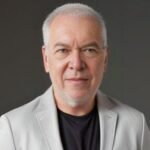
Richard David Hames is an internationally recognised strategic foresight speaker, philosopher-futurist, author and adviser whose work explores the future of business, leadership, governance and society. With decades of experience advising governments, global corporations and influential decision-makers, he challenges conventional thinking and helps organisations anticipate disruption, navigate uncertainty and create meaningful, sustainable change.
Working at the intersection of business strategy, systems thinking and civilisational transformation, Richard brings an unusually broad perspective to the challenges facing today’s leaders. His expertise spans strategic foresight, organisational transformation, sustainability, innovation and the future of governance, offering audiences fresh insights into the forces reshaping economies, institutions and society.
An Australian citizen educated in Britain and continental Europe, and now based in Thailand, Richard holds doctorates in music, medicine and computer science. His multidisciplinary career began in paediatric oncology before progressing through computer science, music composition and sound design into senior academic leadership. His appointments have included Dean of the Australian Film, Television and Radio School and Distinguished Professor of Foresight at Dhurakij Pundit University in Bangkok.
Richard established his reputation in business as a turnaround leader, transforming a near-bankrupt media company into one of Europe’s most successful. His approach to leadership and organisational change was strongly influenced by his professional relationship with pioneering management thinker W. Edwards Deming.
In 1993, he co-founded Global Business Network Australia, followed by the establishment of The Hames Group in Chicago in 1995. The international strategy and design consultancy grew to approximately 180 employees and advised more than 200 corporate and government clients across Europe, the Americas, Asia, Africa and Australia.
His extensive advisory experience includes working with the Chinese government under Premier Wen Jiabao on environmental sustainability, alongside engagements spanning financial systems, taxation, urban development, security, philanthropy and governance. Throughout his career, Richard has been recognised for identifying emerging trends and systemic risks well before they enter mainstream strategic debate.
A pioneer in strategic foresight and transformational change, Richard has developed influential methodologies including Strategic Navigation, Deep Design, Transformational Narrative, Systemic Acupuncture and Wayfinding. These approaches help leaders understand complex systems, challenge established assumptions and develop more effective responses to uncertainty.
His Ecority framework integrates ecological philosophy, long-term stewardship and responsible decision-making, encouraging organisations to consider how their strategies affect current stakeholders, future generations and the planet.
Richard currently serves as President and Chairman of the Asian Foresight Institute, founder of the Centre for the Future and Director of Strategy for MHealth in the United Kingdom. He continues to advise government ministers, entrepreneurs, business leaders and family offices on emerging challenges and long-term strategic opportunities.
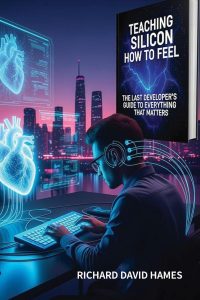
The author of approximately 30 books, his publications include The Management Myth, The Five Literacies of Global Leadership, Teaching Silicon How to Feel, The End of the Opposition and Wayfinding: Navigating without Maps. His latest thinking is published through The Hames Report on Substack and The Virtual Activist on Patreon.
A Fellow of the World Academy of Art and Science, Richard has also chaired Australia21 and the International Steering Committee of the State of the World Forum. His international recognition includes the Leverhulme European Fellowship, Lord Attlee Fellowship and a French Government Scholarship.
As a keynote speaker, Richard David Hames offers senior executives and leadership teams a thought-provoking perspective on strategic foresight, navigating complexity, reimagining leadership and shaping a more sustainable future.
TESTIMONIALS
“Richard Hames provides a powerful diagnosis of present realities, new paradigms of thought, and an ecological model of action in an uncertain world.”
Peter Schwartz
President, Global Business Network
“Richard is unique among strategists; always entertaining and challenging but generous to a fault with ideas, personal connections, and ways that can be turned into commercial advantage.”
Michelle Gass
President and CEO, Levi Strauss & Co.
“Richard’s capacity to weave together the major issues that are shaping our future world is extraordinary.”
Michael Roux
Chairman, Australian Davos Connection
“Richard Hames has, in a very significant way, helped us to reshape the Australian Taxation Office and lay the foundations for a new organization that is now so essential as we move into a huge tax reform process here in Australia.”
Michael Carmody
Commissioner, Australian Taxation Office