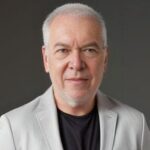
Richard David Hames is a philosopher-futurist, strategic foresight practitioner, author and mentor whose
work sits at the intersection of business, government and civilisational change. An Australian citizen educated
in Britain and continental Europe, and now based in Thailand, he holds doctorates in music, medicine and
computer science.
He began his working life in paediatric oncology before moving through computer science,
music composition and sound design into senior academic posts, including Head of Sound Design at
Dartington College of the Arts, Head of Contemporary Music Studies at the Victorian College of the Arts,
Dean of the Australian Film, Television and Radio School, and Distinguished Professor of Foresight at
Djurakijpundit University in Bangkok.
He built his early reputation in industry as a turnaround leader, taking a near-bankrupt media company and
rebuilding it into one of Europe’s most successful, an experience shaped by a close professional friendship
with the quality-management pioneer W. Edwards Deming.
In 1993 he co-founded Global Business Network
Australia; two years later he founded The Hames Group in Chicago, a strategy firm and design laboratory that
grew to some 180 staff and advised more than two hundred corporate and government clients across the
United States, Europe, Asia, Africa, Brazil and Australia.
His advisory relationships in China date back to
work with Premier Wen Jiabao’s government on environmental sustainability, and his counsel has since
extended into taxation, financial systems, urban design, security, philanthropy and the future of governance
itself.
He is the originator of several methodologies now widely applied to complex institutional change, including
Strategic Navigation, developed with the Australian Taxation Office ahead of national tax reform, along with
Deep Design, Transformational Narrative, Systemic Acupuncture and Wayfinding.
His Ecority framework, built over the past decade, brings ecological philosophy and long-horizon stewardship into strategic decision making, testing every engagement against whether it serves the present, future generations and the planet.
He currently serves as President and Chairman of the Asian Foresight Institute, founder of the Centre for the
Future, and Director of Strategy for MHealth in the United Kingdom, and continues to advise ministers,
entrepreneurs and family offices throughout the Global South. Colleagues have noted his record for reading
emerging conditions well ahead of consensus, from the business implications of climate change in the 1980s
to the social pressures that later produced the Arab Spring.
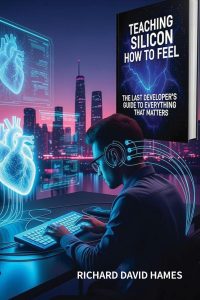
He is the author of around 30 books, among them The Management Myth, The Five Literacies of Global
Leadership, Teaching Silicon How to Feel, The End of the Opposition, and Wayfinding: Navigating without
Maps. His current writing appears through The Hames Report on Substack and The Virtual Activist on
Patreon.
He is a Fellow of the World Academy of Art and Science, has chaired Australia21 and the
International Steering Committee of the State of the World Forum, and has held various fellowships the Leverhulme European Fellowship, the Lord Attlee Fellowship and a French Government Scholarship
TESTIMONIALS
“Richard Hames provides a powerful diagnosis of present realities, new paradigms of thought, and an ecological model of action in an uncertain world.”
Peter Schwartz
President, Global Business Network
“Richard is unique among strategists; always entertaining and challenging but generous to a fault with ideas, personal connections, and ways that can be turned into commercial advantage.”
Michelle Gass
President and CEO, Levi Strauss & Co.
“Richard’s capacity to weave together the major issues that are shaping our future world is extraordinary.”
Michael Roux
Chairman, Australian Davos Connection
“Richard Hames has, in a very significant way, helped us to reshape the Australian Taxation Office and lay the foundations for a new organization that is now so essential as we move into a huge tax reform process here in Australia.”
Michael Carmody
Commissioner, Australian Taxation Office