‘Probably the UK’s greatest living statistician’ – The Telegraph
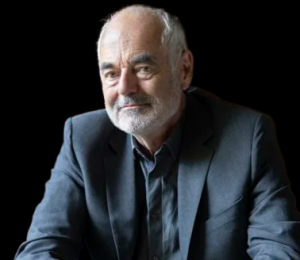
Sir David Spiegelhalter FRS OBE is an internationally renowned risk and uncertainty speaker, statistician and leading authority on evidence-based decision-making. As Emeritus Professor of Statistics at the University of Cambridge, he brings exceptional expertise in understanding risk, communicating uncertainty and making informed decisions in an increasingly complex world.
He was previously Chair of the Winton Centre for Risk and Evidence Communication, which aimed to improve the way that statistical evidence is used by health professionals, patients, lawyers and judges, media and policy-makers. He is a regular media commentator on statistical issues, with a particular focus on communicating uncertainty.
David Spiegelhalter is a rarity a statistician who has a high public profile. During the Covid pandemic he became a media fixture, and ended up fulfilling a life’s ambition of appearing on Desert Island Discs.
He presented the BBC4 documentaries “Tails you Win: the Science of Chance” and the award-winning “Climate Change by Numbers”.
His bestselling book, The Art of Statistics, was published in March 2019, Covid by Numbers in September 2021, and The Art of Uncertainty in 2024.
He was elected Fellow of the Royal Society in 2005, awarded an OBE in 2006, and knighted in 2014 for services to medical statistics. He was President of the Royal Statistical Society for 2017-2018, and has been a Non-Executive Director of the UK Statistics Authority since 2020.
Keynote Talk
The Art of Uncertainty: Balancing the power of statistical methods with imagination and humility
“Uncertainty is the conscious awareness of our ignorance”
Some qualities are essential for navigating our uncertain age. First, humility requires maintaining openness to unanticipated events. Second, imagination allows us to envision potential futures, particularly adverse scenarios. Finally, resilience enables recovery from unexpected shocks. We need to build the best possible models that summarise our understanding and available data. But both individuals and organizations need physical and mental reserves rather than systems optimized solely for current conditions.
By cultivating imagination, humility, and resilience, we can better face an unpredictable future—not by eliminating uncertainty, but by developing the capacity to adapt and recover when the unexpected inevitably occurs.